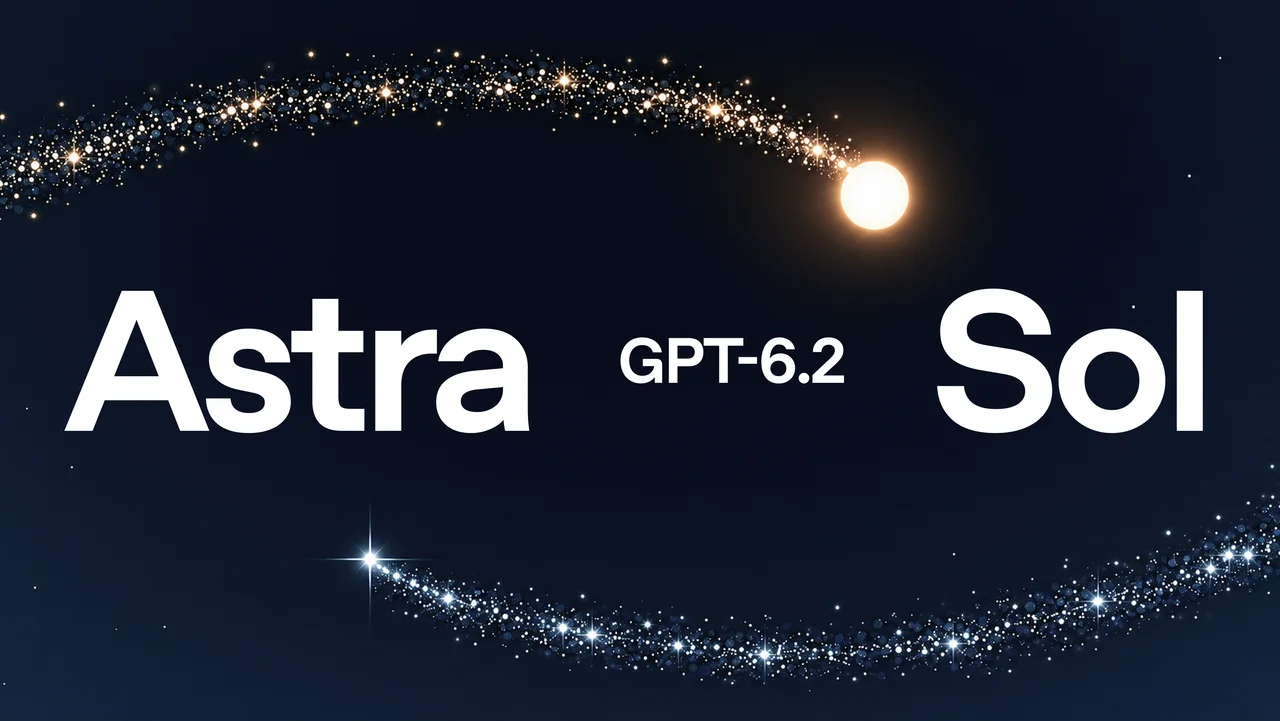
Mistral Large 4 became available as downloadable open weights on October 29, 2026, following its October 6 public preview. The release gives developers an updated version of Mistral’s flagship multimodal model, nicknamed Le Chonk, with options to run it on their own infrastructure. The distinction matters: October 29 marks the weights release and subsequent improvements, rather than the model’s first public appearance. Hugging Face release article, Mistral preview model card
What changed in the Mistral Large 4 release?
Mistral says it continued reinforcement learning after the preview, concentrating on coding, defensive cybersecurity and more efficient reasoning. Its October 29 announcement reports a 48% Artificial Analysis Coding Agent Index score, using 47% fewer tokens per task than the comparison model, GLM-5.3. It also reports 41% on Terminal-Bench 4.0, up 13 percentage points from the preview. These are results presented by Mistral, rather than tests conducted for this article. Mistral weights-release announcement
Those results describe particular evaluations and configurations. They do not establish a universal ranking for every repository or security workload. When comparing a preview review with a new evaluation, record the checkpoint, reasoning setting, agent harness and benchmark version; a shared product name is insufficient to identify an equivalent test.
Mistral Large 4 specifications at a glance
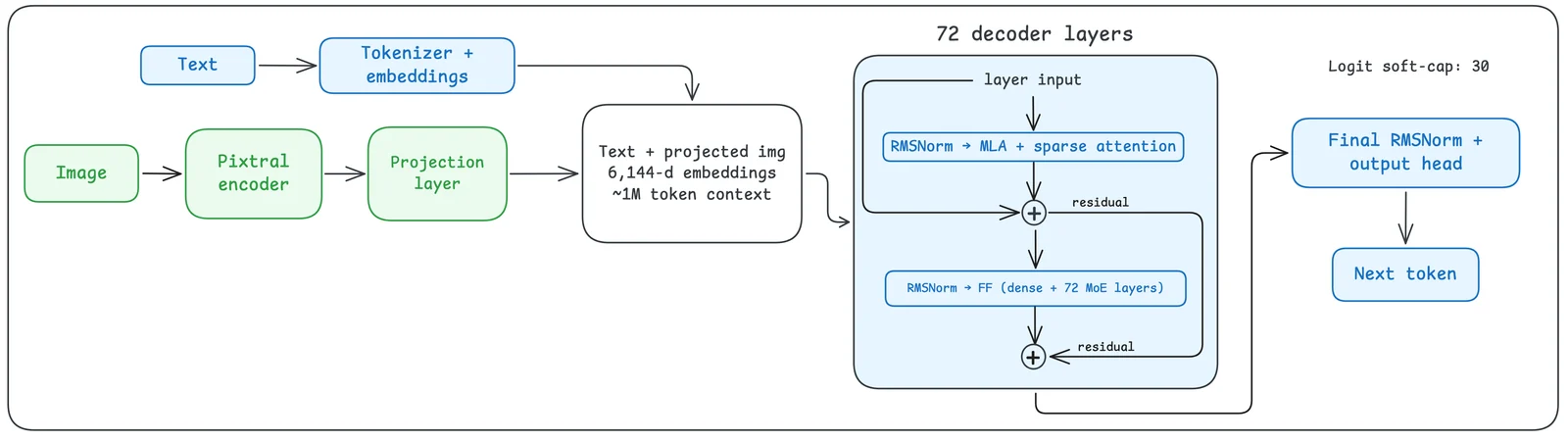
The released checkpoint combines a large expert pool with sparse activation. The active-parameter figure describes computation per token; it does not mean that only those parameters need to be stored.
Source: Mistral AI / Hugging Face
| Specification | Published detail |
|---|---|
| Architecture | Multimodal Mixture of Experts |
| Total parameters | Approximately 1 trillion |
| Active parameters | 49 billion; 52 billion including embeddings and output layers |
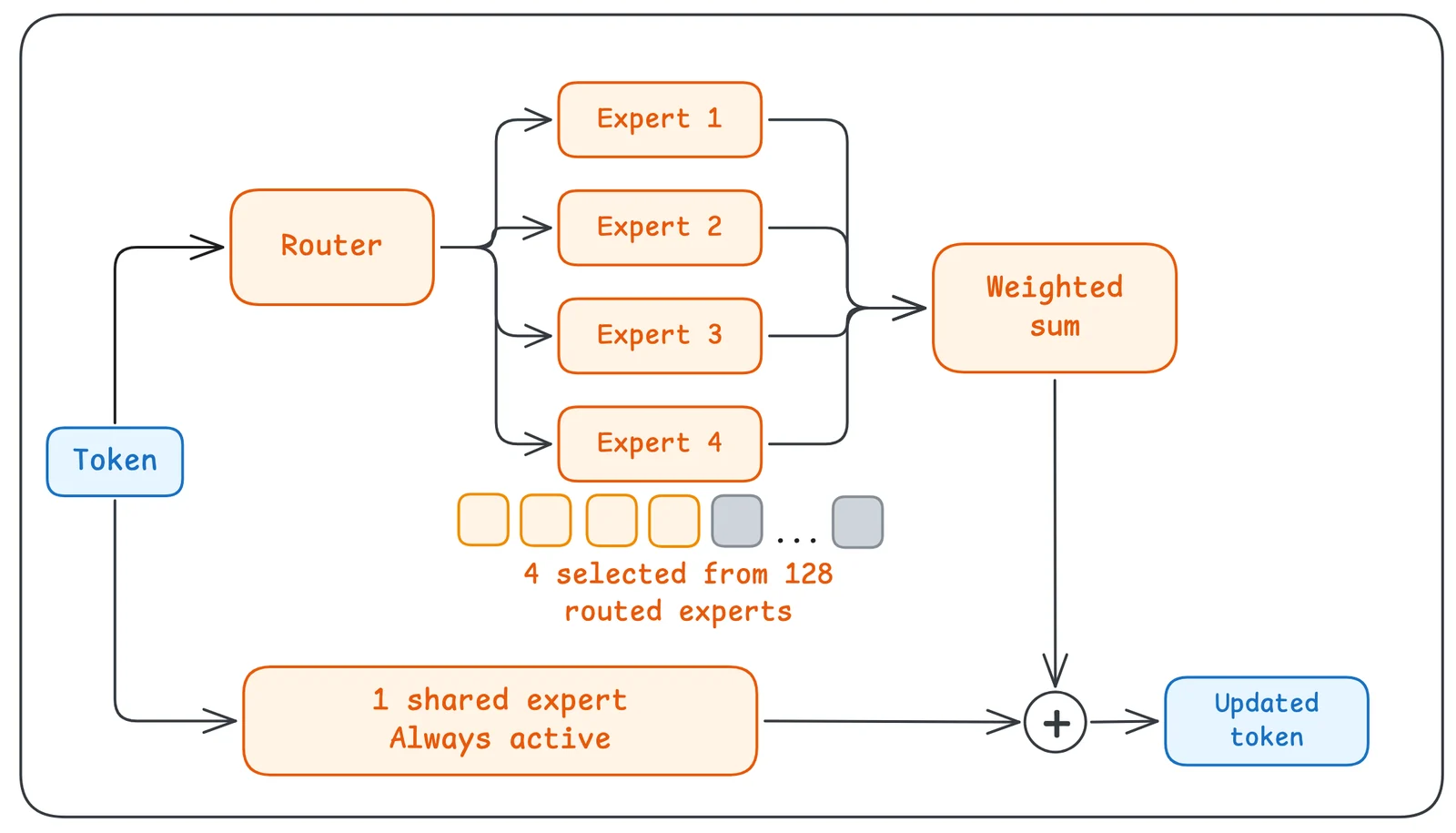
| Expert routing | Four selected experts from 128, plus one shared expert |
| Context window | 1 million tokens |
| Inputs and outputs | Text and images in; text out |
| Reasoning controls | Low, medium and high; high is the default |
| Official checkpoints | FP8 and NVFP4 |
These specifications come from the official checkpoint card. Image input supports understanding visual material; this release should not be described as an image-generation model.
Open weights and the licensing boundary
Mistral Large 4 uses the Mistral Ecosystem Open-Weight License, a modified MIT license. The published text permits use, modification, further training and distribution, subject to its conditions. Copies or substantial portions must retain the copyright and permission notices. Full model license
A significant condition concerns Model as a Service businesses. If a licensee or its affiliates operates such a business, a separate commercial agreement with Mistral is required before commercial use of the model or derivatives. The definition covers third-party inference or post-training access that gives meaningful control over inputs, parameters or training data. It excludes model capabilities embedded solely within specific product features or harnesses, and simple relaying to models hosted elsewhere. Section 3 also exempts internal use and use through Mistral’s official products from that requirement. License conditions and definitions
This distinction makes the proposed service design relevant. An internal assistant, a constrained product feature and a general-purpose hosted model endpoint should not automatically receive the same licensing conclusion.
Access through APIs, downloads and coding tools
The Mistral model directory lists mistral-large-4 and documents chat completions, function calling, structured output and document question answering. A hosted API is one access route; downloading weights is another, with separate operational responsibilities. Mistral model directory
Hugging Face provides the official FP8 and NVFP4 repositories and describes Transformers, vLLM and llama.cpp support. Its launch article also documents a managed Inference Endpoints recipe with a 131K context limit. That recipe’s configured limit is smaller than the model’s advertised context capacity. Hugging Face integration guide
Mistral Vibe supplies an application layer for coding work. Its repository describes a command-line assistant that can search a codebase, edit files and execute commands. This is separate software around the model: evaluating chat responses alone will not measure an agent’s ability to navigate a repository and complete a change. Official Mistral Vibe repository
For a Mistral Large 4 coding trial, choose a small repository change with a known acceptance condition: reproduce a defect, modify the relevant function and run the existing checks. Preserve the initial test failure and review the resulting diff. Track whether the assistant found the correct files and whether the proposed patch introduced unrelated edits. This separates a convincing explanation from a change a maintainer could accept. Repeat the task with the same repository state when comparing reasoning levels; otherwise, later attempts may benefit from an already repaired workspace. These are suggested evaluation steps, rather than a claim that Vibe has passed them.
Self-hosting requires a hardware-specific plan
Source: Mistral AI / Hugging Face
vLLM: checkpoint size and usable context
The vLLM recipe lists approximately 1.06 TB of FP8 weights and 610 GB for NVFP4. Its validated hardware configurations include multiple datacenter GPUs, with different choices for precision and parallelism. These are weight sizes, rather than a complete memory budget for a running service. vLLM deployment recipe
The same guide distinguishes the checkpoint’s 1,048,576-position capacity from its validation up to 256K, the context limit used in its default command. Capacity, validation coverage and an operator’s actual setting answer different questions. A deployment review should record all three before estimating how many long conversations can run simultaneously. vLLM context and configuration notes
SGLang: verified combinations and response parsing
SGLang marks verified hardware recipes separately from other combinations. Its guide also requires reasoning and tool-call parsers to return structured fields; without them, those sequences can appear as raw response text. It documents unsupported combinations involving context parallelism and KV-cache sharding. SGLang serving guide
These constraints make a successful model download only the beginning of deployment. Before connecting an application, check a plain response, a structured tool call and an image request against the selected server configuration. That sequence can reveal integration failures that a fluent text answer would conceal.
Reasoning controls and evaluation limits
The three reasoning settings offer a practical comparison axis. Hugging Face’s Transformers guide says reasoning cannot be disabled: supplying none still selects high effort. SGLang instead documents an HTTP 400 response for none. Applications should follow the chosen backend’s contract rather than assume that identical-looking request fields behave identically everywhere. Transformers integration behavior, SGLang reasoning behavior
For repeatable Mistral Large 4 comparisons, SGLang lists recommended sampling values of temperature=1.0 and top_p=0.95. Record those alongside the server version and reasoning level. Changing sampling settings while comparing checkpoints makes it harder to identify the cause of a different answer. SGLang generation guidance
For a coding pilot, measure accepted changes alongside elapsed time, token usage and failed tool calls. Include tasks where the correct outcome is to ask for clarification or leave a file untouched. These are proposed evaluation criteria, not claims about performance observed in our testing.
Security claims also require context. Mistral’s announcement says it observed potential for real attack uplift and plans further guardrail changes. It describes a specialized cybersecurity variant offered to vetted enterprise design partners under additional safeguards. Access to the public checkpoint should not be read as access to that separate variant. Mistral cybersecurity release details
Mistral Large 4 FAQ
Was the model first released on October 29?
Its official model-directory entry dates the public preview to October 6, 2026. October 29 is the open-weight release covered here. Preview date, Weights-release date
Can it generate pictures?
The released model accepts images and text and produces text. Its vision capability is for understanding visual inputs. Official input and output specification
Does sparse activation make it a laptop-sized model?
The official FP8 and NVFP4 vLLM recipes use substantial datacenter infrastructure. Active parameters alone are an unreliable guide to the memory needed for those checkpoints. Weight sizes and hardware requirements