Wow You Can Really Dance F1 Driver AI Trend
At the station after dark, two drivers give each other a long look. A teammate in the back pulls a face, the screen splits in two, and the orange and red suits finally dance side by side. You can take the orange suit and invite friends for the other parts.
Why choose Mianvo?
The role pictures come from separate close-ups in the credited clip, so you can tell the responding driver from the observer before you pick photos. Replay the wide shot to see how all three parts fit on one station platform.
- Credits back if generation fails
- See the credit cost before you generate. If the job is confirmed failed and no video was delivered, we return the credits reserved for it.
- Your photos stay private
- The selected model provider processes your photos. They stay private, and Mianvo does not use them to train its own AI models. You decide whether to publish your video.
- Automatic photo cleanup
- Original photos stored by Mianvo enter automatic cleanup 24 hours after upload. If a queued or running job still needs a photo, cleanup waits until that job ends.
Five looks on the night platform
All times start at the beginning of the 15-second template excerpt. The linked creator post begins seven seconds earlier. The sleeves, the station lights and the orange line in the split screen show exactly where the cut places each viewer.
The orange driver looks across the platform
There is enough space behind the orange shoulder to see the lights recede into the night. The face belongs to the person who will stand on the left in the last shot. This first clear look makes the later reverse shot intelligible.
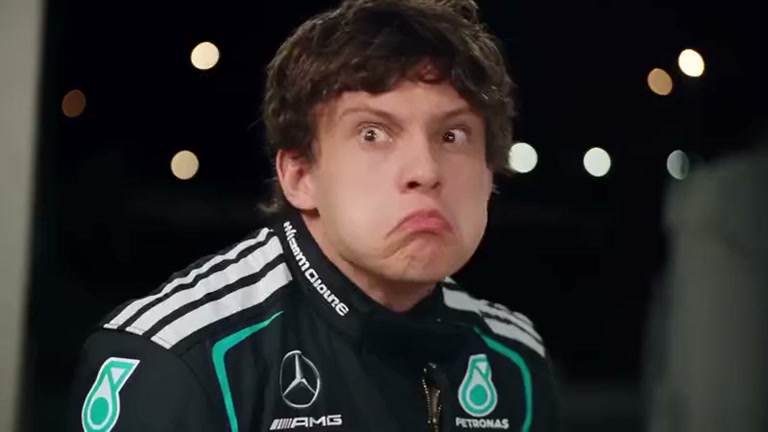
A witness interrupts the exchange
The dark suit and light stripes flash into view. Eyes wide and lips pulled down, the observer has the attention of the whole frame for a moment. They will be much smaller when the same platform is shown from farther back.
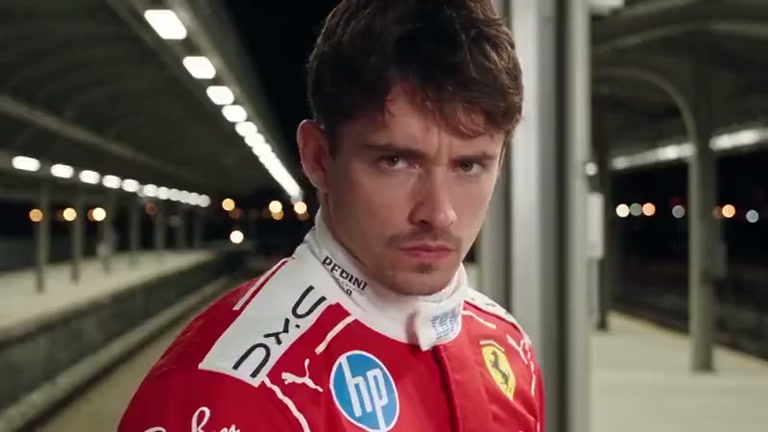
Red gets the reverse angle
The red collar comes into focus as the speaker holds a stern look down the platform. Watch where the line of ceiling lights falls beside the head. It gives this reverse angle depth even through a tight close-up.
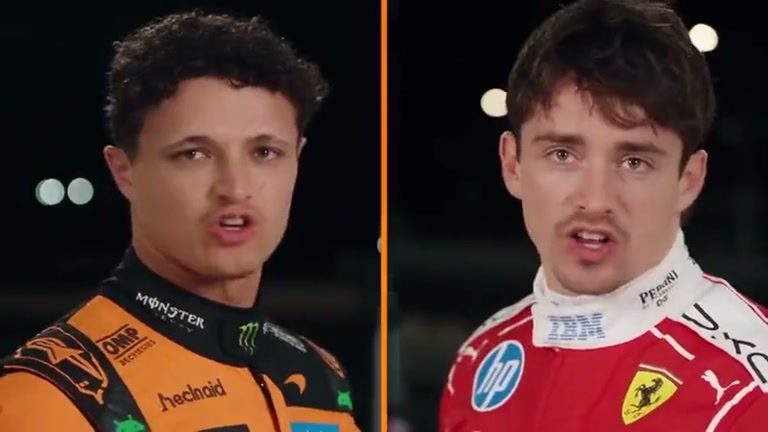
Two faces share one frame
A thin orange divider gives both leads an equal slice of the picture. The exchange can now land at the same moment on either side. The observer is absent from this particular arrangement.
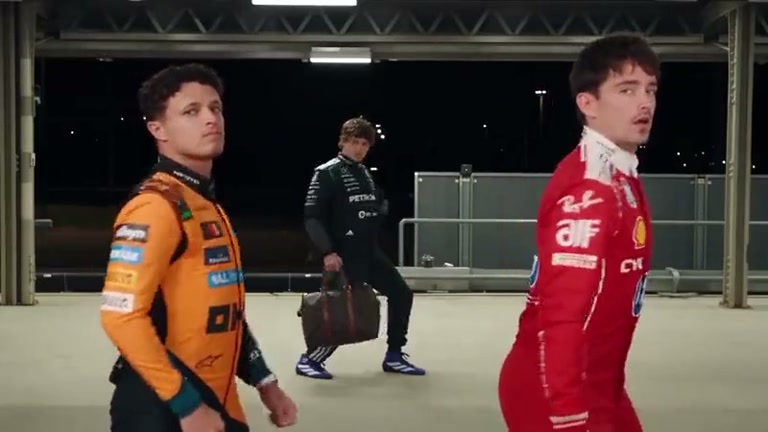
The shared dance
The divide disappears. Both suits are standing on the same floor with room to move their shoulders, and the third driver is visible between them farther back. This is the wide composition worth keeping when you share the finished clip.
Choose three recognizable faces for three different distances
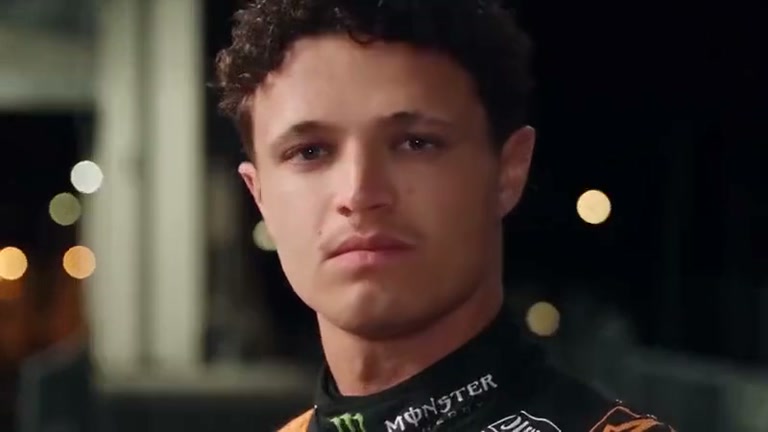
Start with the person who will wear orange. The scene cuts from a direct look to a profile, then puts the performer on the left side of a two-person dance. Pick a picture where the hairline and the side of the jaw are visible. A little turn of the head is fine. A photo taken deep under a peaked cap may look perfectly at home at a race, but the brim can hide exactly the features that make a friend recognizable in the close-up. A simple picture taken indoors works well for this setup.
The red driver has a reverse angle. At first, part of the orange suit passes between this person and the lens. Later, the frame gives the red driver a whole half of the screen. If you are choosing between two photos for this role, compare what happens around the eyes when you make each picture small. The suspicious look across the platform reads before the mouth even starts to move. Keep both brows clear, particularly if the person has a fringe or dark glasses.
The optional observer is the friend who can get a laugh without speaking. Their widest-eyed expression has a shot of its own, then you can spot the dark suit again farther back on the platform. An ordinary neutral portrait is useful here. The raised brows and pulled mouth belong to the moving reference, so the input can show the person as the group normally sees them. Use a separate file for each person, especially if two friends are standing cheek to cheek in the only photo you have.
Where did the “Wow, you can really dance” line in the F1 edit come from?
What the Coincidance platform prompt keeps
This joke depends on knowing who is looking at whom. The orange suit gets a look; the red suit answers it; the spectator seems to be watching an exchange they do not quite understand. The prompt ties each face to a costume and to its final place on the platform. Names alone are less useful in a busy reverse angle, where the back of one driver can occupy more space than the face of the other. The color and position give the editor the same clues the audience has.
The division down the frame is part of the reference edit. Both people get a close-up at once, then a normal wide shot puts their bodies in the same space. It is tempting to add a racing car, an interview microphone or a grandstand to make the F1 theme more obvious. In this clip the suits already carry that information. The ordinary station and the observer’s unhurried reaction are what make the tiny dance feel out of place.
Edit @Video1. Recast only the assigned people. Preserve the orange suit at the left of the final platform shot, the red suit at the right and the dark suit behind them. Follow the reference eye lines, the observer’s raised eyebrows, the split-screen exchange and the final small synchronized dance. Keep the wide night platform, overhead lighting, camera cuts and reference soundtrack. Do not add an interview, cars or a race.
Give the observer one job on the cut back
If you are casting three friends, try adding “When the two suits start dancing, keep the dark-suited observer behind them, watching rather than joining the front row.” The reference already shows a reaction close-up, so this sentence is a request about the later wide shot. You can check it at a glance. A request that everyone perform the same big move would give away the distinction between the two dancers and their audience.
For a two-person version, leave the observer slot empty. You may want the two leads to stay easy to tell apart even when their faces are small. One concrete direction such as “Keep the left dancer’s short curls visible above the orange collar” is easier to inspect than a list of costumes, props and camera moves. Watch the split screen first to find the curl shape and then the wide shot to find the same head. The edit is doing its job if a viewer can follow that handoff without pausing.
From Coincidance to a racing fan edit
The song video and the two platform posts have different creators. These links let you hear the source of the line and identify the particular fan edit that supplies this template.
The Coincidance video
Handsome Dancer published Coincidance, the musical comedy built around two people discovering that they can both dance. The line in the racing edit points back to this performance.
Handsome Dancer on YouTubeTwo suits on a platform after Vegas
@clarkkent.ae14 shared an AI fan edit captioned around the drivers after Vegas, tagging Charles Leclerc and McLaren. This is the post containing the platform scene used here.
@clarkkent.ae14’s platform postAnother pair gets the same joke
Later the same day, the account posted another version with a caption naming Lewis and Kimi. It is a separate post, so you can compare the pairing without confusing it with the reference in the player.
The Lewis and Kimi post
Frequently asked questions
Which drivers appear in the reference?
The credited AI edit depicts Lando Norris in orange and Charles Leclerc in red. A third driver in a dark suit takes the comic reaction shot. The reference is a staged fan edit set on a station platform. The accompanying music video by Handsome Dancer explains why the exchange revolves around that particular line.
Do I need three photos?
One person can do the orange part. The red part and the observer are both optional. For example, two friends can take the orange and red suits and leave the existing observer on the platform. If your friend prefers the reaction, add that photo to Observer and leave the red slot empty.
Which part of the post is included?
The full credited clip runs a little over 22 seconds. This version uses 7 to 22 seconds. The earlier opening of the exchange is in the linked post. The excerpt keeps the reaction close-ups, split screen and the shared dance, and the output follows those same 15 seconds.
Will it sing a different line if I type new lyrics?
The template keeps the reference soundtrack. It follows the exchange in the excerpt and does not record a replacement performance from new text. If you have your own punch line in mind, a separate caption after the dance leaves the timing of the two voices intact.
Can I make a vertical racing edit here?
This template keeps the platform in 16:9 so the red and orange dancers both fit at the end and the observer has space behind them. For a vertical post, put the finished landscape clip inside a portrait canvas in your sharing editor. A full-height center crop across the final shot can cut away the people at either side.
Can I use a real person’s photo or share the result publicly?
Mianvo provides the video tool. You are responsible for the material you upload and how you use the result. You need permission to use someone else’s likeness or voice. Real-person face swaps and impersonation are prohibited, even with consent. Before sharing, make sure you have the rights to publish the visuals and music. Do not present an AI-generated clip as genuine footage. To report infringement, send the page link or task ID to support@mail.mianvo.com. We review reports and take action under applicable law.